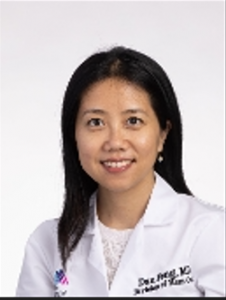
Dr. Feng is an Assistant Professor of Medicine in the Division of Gastrointestinal Oncology. Her proposal is titled ‘Targeting IL-4 signaling in immunosuppressive myelopoiesis to overcome resistance to checkpoint blockade in colorectal cancer liver metastasis’. Her mentors will be: Miriam Merad, MD, PhD, Thomas Marron, MD, PhD, and Joseph Sparano, MD.
Dr. Feng is a physician-scientist with over ten years of laboratory and translational research experience in cancer biology and immunology. Her latest postdoctoral research investigated the mechanisms of immunosuppression in colorectal cancers (CRCs) and aimed to address the pressing need of immunotherapy for patients with metastatic MMR-proficient (pMMR) CRCs. Using tumor organoids and mouse models, she studied the immunomodulatory circuits centered on regulatory T cells and explored novel therapeutic opportunities for pMMR CRCs. This work is mentored by Dr. Alexander Rudensky, Chair of the Immunology Program at Memorial Sloan Kettering Cancer Center, a world-renowned expert in T-cell biology.
Prior to her clinical training as a medical oncologist, Dr. Feng completed her PhD research training with the Cancer Biology Graduate Group at the University of Pennsylvania (2007-2013), she received a comprehensive education in the core principles and experimental approaches in cancer research. Her dissertation research, mentored by Dr. Mitchell A. Lazar, uncovered novel connections between circadian rhythms and key metabolic activities, such as lipid biosynthesis in the liver and thermogenesis in the brown adipose tissue. Dr. Feng discovered that nuclear receptor Rev-erbalpha and the associated histone deacetylase HDAC3 drive the circadian lipid biosynthesis in the liver and are essential for maintaining metabolic homeostasis and preventing hepatic steatosis. Her graduate research led to one first-author research article in Science and three second-author articles in high-impact journals including Nature and Molecular Cell.
Utilizing her expertise in cancer biology and immunology, she will focus on developing and testing novel immunotherapies for hepatobiliary cancers and other gastrointestinal cancers as a clinical investigator. Dr. Feng will collaborate with the Precision Immunology Institute on translational research involving human subjects and patient specimens. She is especially interested in neoadjuvant immunotherapy for patients with locally advanced cancers since it may improve the cure rate and help to comprehend the molecular mechanisms of resistance and response.
ConduITS is supported by NCATS of the NIH’s CTSA Program. Any use of CTSA-supported resources requires citation of grant number UL1TR004419 awarded to ISMMS in the acknowledgment section of every publication resulting from this support. Adherence to the NIH Public Access Policy is also required.