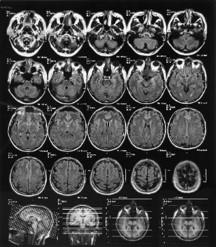
 The Mount Sinai Imaging Research Warehouse (MS-IRW) has the potential to transform the field of radiology, and streamline the way radiologists read and collect data in the future. The MS-IRW is a unique resource that will provide large volumes of de-identified images to the research community.
About six years ago, Dr. Mendelson had the concept for the MS-IRW and received global IRB approval for internal Mount Sinai investigators to utilize the IRW.
In the early stages, the MS-IRW used The Mount Sinai Biomedical Engineering and Imaging Institute (BMEII) formally TMII, as a developer and built the infrastructure over a year in collaboration with Mount Sinai Data Warehouse (MSDW). The IRW currently has 500,000 exams, the initial audit of images was funded by the Clinical and Translational Science Awards (CTSA) grant UL1TR001433 from the National Center for Advancing Translational Sciences, and the National Institutes of Health.
These images are rich in data types, including metadata and quantitative (radiomics) data, both structural and functional. Traditional Clinical research can utilize phenotypic data correlated with genomic and proteomic data. Once we obtain images, we run them through an algorithm we developed, which identifies hidden PHI beyond the usual markers to ensure patient confidentiality; some vendors will mask PHI in hidden tags.
Currently, the field of machine learning in this area can be data-poor with few resources. This model fills a gap in the new world of healthcare ‘big data”. The de-identified data contained within patients’ radiological images are hard to make use of, and the IRW is the solution to expose this information for analysis.
Feeding this extensive data set into machine learning algorithms will allow radiologists to use specialized software to help evaluate images for known abnormalities. In turn, this may allow for the development of new and more accurate imaging techniques, such as shorter MRIs and CT scans, which will optimize imaging, streamline procedures, and elevate the patient experience.
The MS-IRW is currently in collaboration with Stanford University to test their existing algorithm for further de-identification of the MS-IRW images and understanding of the generalization of AI models for medical imagining.
Future goals for the IRW include full integration with the Mount Sinai Data Warehouse, sharing our expertise, techniques, code, and images with CTSA hubs and the broader community and exploring the extension of the IRW to other imaging domains, such as Cardiology and Pathology.
David S. Mendelson, MD FACR is Associate Chief Medical Information Officer-Mount Sinai Doctors Faculty Practice Vice Chair Radiology IT | Mount Sinai Health System Professor of Radiology |Icahn School of Medicine at Mount Sinai Co-Chair Integrating the Healthcare Enterprise (IHE)- International.